

9 jobsite mistakes that cause rust and stains on metal buildings
A Butler building is engineered to last for decades. But the steel is only half the story. How your panels are stored, handled, and installed decides whether the building looks sharp in year 20 or starts streaking in year one.
Most complaints about rust, stains, and leaks have nothing to do with how the steel was made. They trace back to the jobsite. The good news is that nearly all of it is preventable.
Here are the nine mistakes to watch for, and what to do about each one.
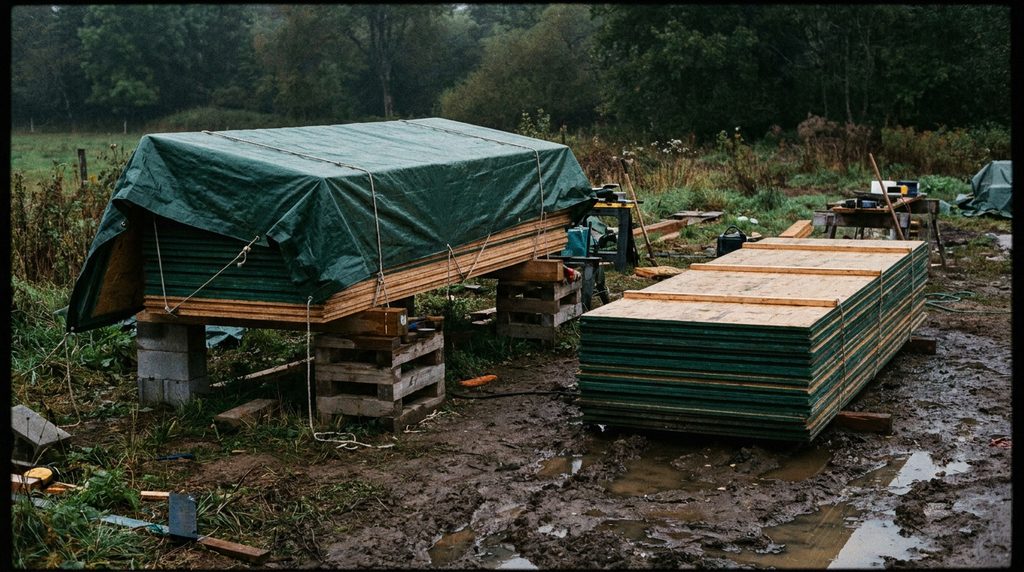
1. Leaving panel bundles in the wet
Tightly stacked panels trap moisture. With little air reaching the steel, that moisture creates white or black staining on bare panels. On painted panels it shows up as blisters that can eventually peel. Once it sets in, it is very hard to fix without hurting the finish.
The fix: Keep bundles off the ground and under a waterproof cover with air able to circulate underneath. Raise one end slightly so water runs off, and cover partially used bundles again at the end of each day.
2. Letting dirt and mud get on the panels
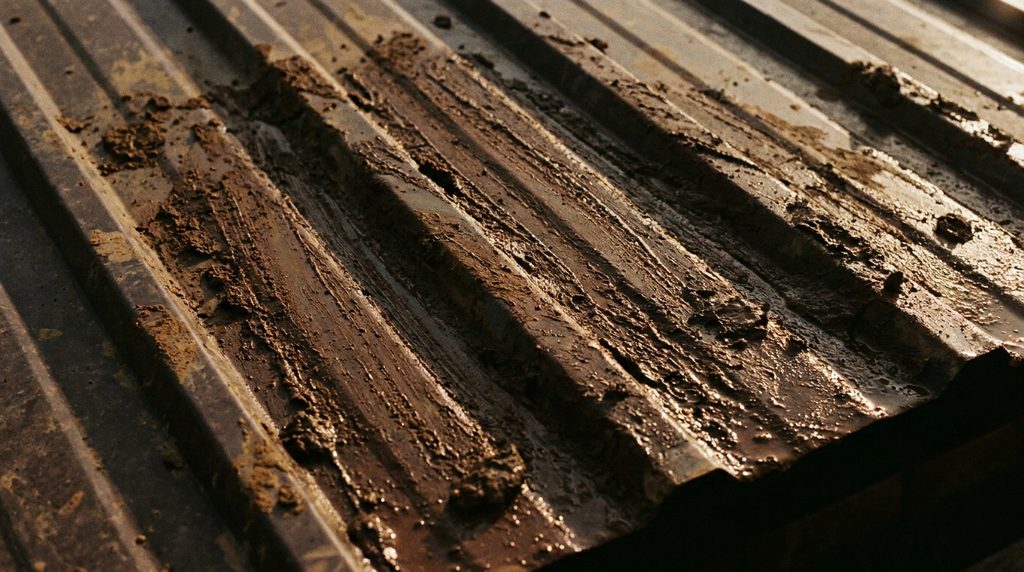
Mud from the site transfers to the top panels of a stack, then spreads across the roof as the crew walks on it. If it stays, it stains, makes the finish look uneven, and holds moisture against the steel.
The fix: Store panels on clean ground or blocking, and rinse off dirt right after installation. An annual wash keeps the building looking new and clears out debris that traps moisture.
3. Handling bare panels with dirty hands and boots
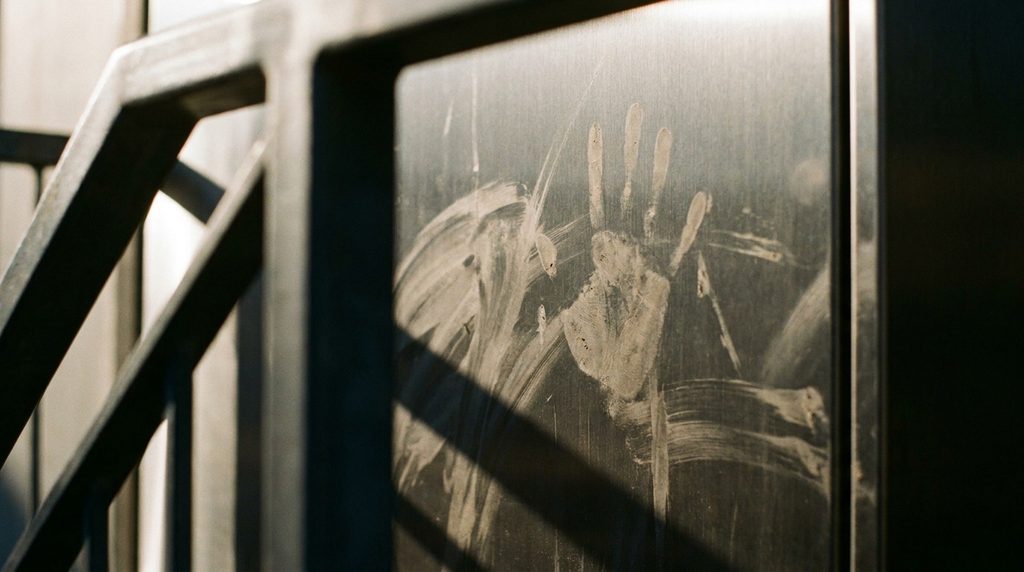
Bare coated steel shows everything. Handprints, footprints, and smudges come from oil and sweat on bare hands, panels rubbing together, and walking on the surface. The marks are cosmetic and do not affect corrosion performance, but they are permanent eyesores on a building you are proud of.
The fix: Crews should wear clean gloves and keep panel to panel contact to a minimum. For a more forgiving finish, ask us about coated options that resist smudging better than bare panels.
4. Driving fasteners wrong, or using the wrong ones
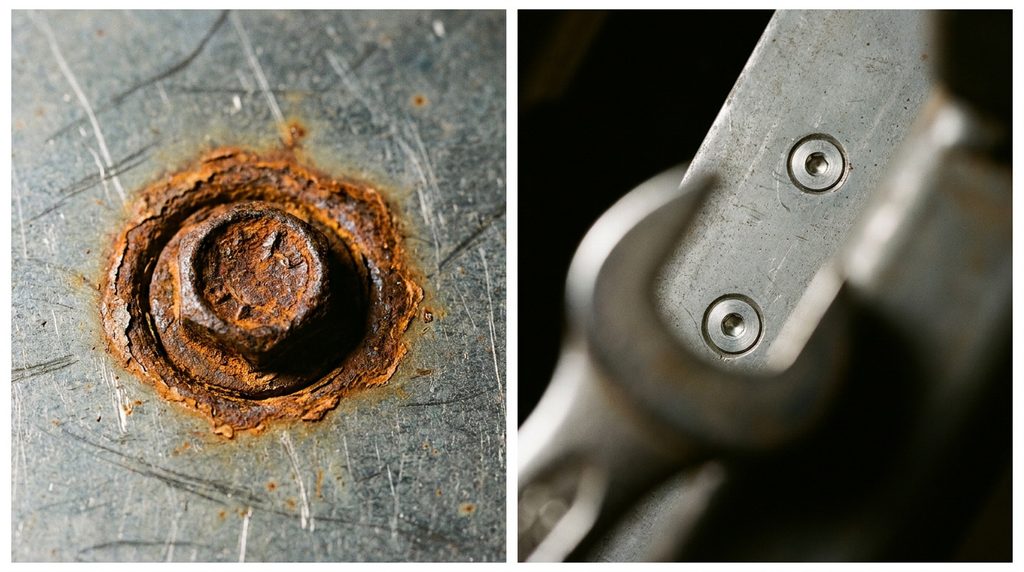
Overdriven fasteners leave a dip around the head where water collects and rust starts. Underdriven or backed out fasteners let water leak in and soak the insulation. And fasteners that don’t match the panel in color or material can rust red and streak a clean roof.
The fix: Use the correct fastener for your panel, set it flush and snug, and avoid impact tools. Driving tools with depth sensing nose pieces make correct seating much easier.
5. Letting panel edges sit in contact with concrete or wet insulation
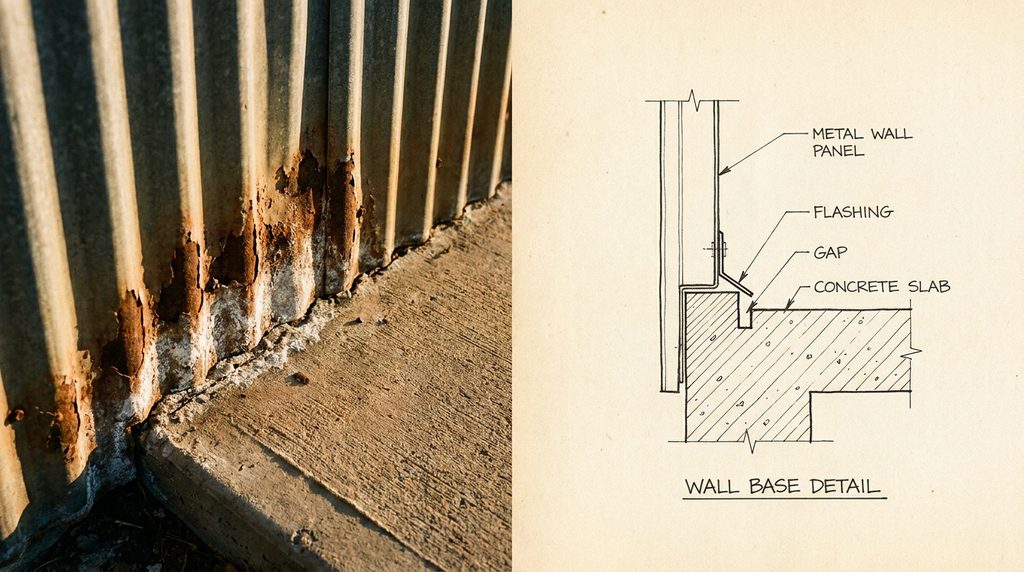
The cut bottom edge of a wall panel is its most vulnerable spot. Concrete contact can speed up corrosion. Insulation that reaches the bottom edge can wick up moisture and keep the edge permanently wet. Both lead to rust lines and paint failure along the base of the wall.
The fix: Use base trim so water drains away from the panel, keep a small gap between the panel edge and the trim leg, and stop insulation about one inch above the bottom edge. Good flashing design matters just as much as the panels themselves.
6. Skipping sealant at end laps
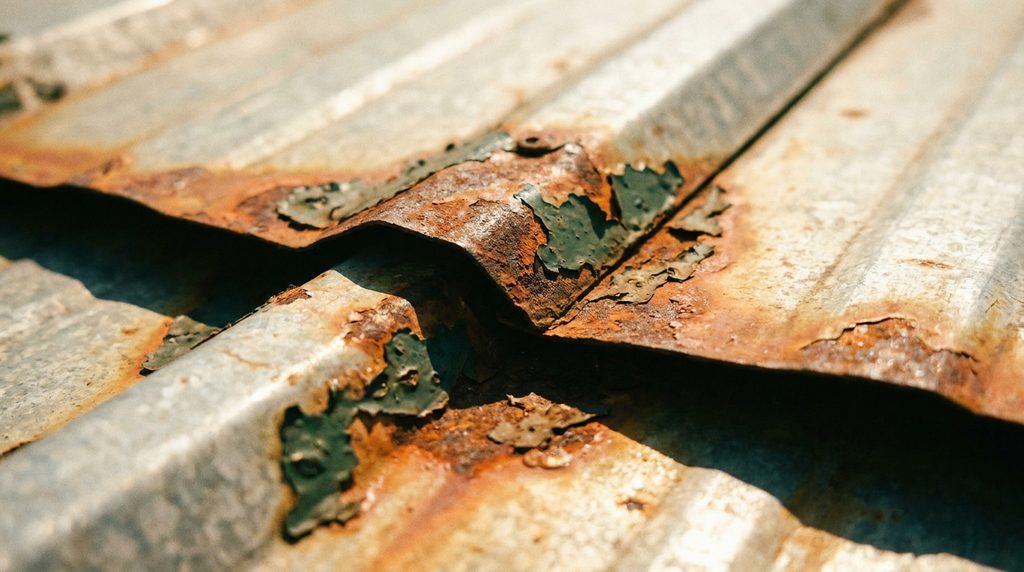
Where panels overlap end to end, water can get trapped and corrode the joint from the inside. On painted panels it often appears first as blistering along the lap.
The fix: Seal every end lap as specified. Ask your crew to confirm it before the roof is closed in.
7. Leaving metal filings on the roof
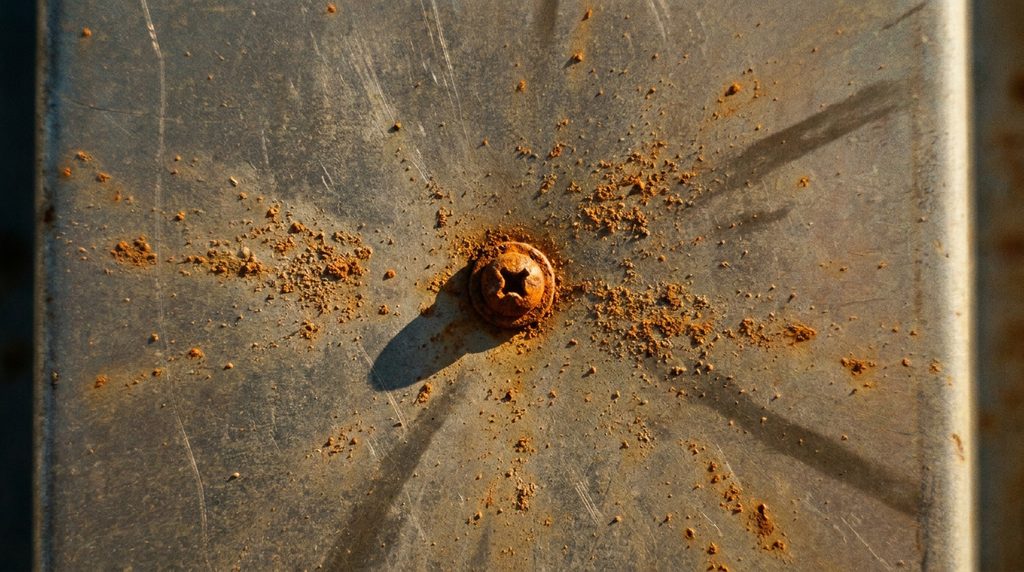
Drilling and cutting throw off tiny hot metal fragments. If they stay on the panel, they rust overnight and leave orange freckles that stain the surface, on bare and painted panels alike.
The fix: Sweep or blow off filings at the end of every workday, and cut and drill from the back side of the panel where possible so hot particles don’t land on the finished face.
8. Writing on galvanized steel with a pencil
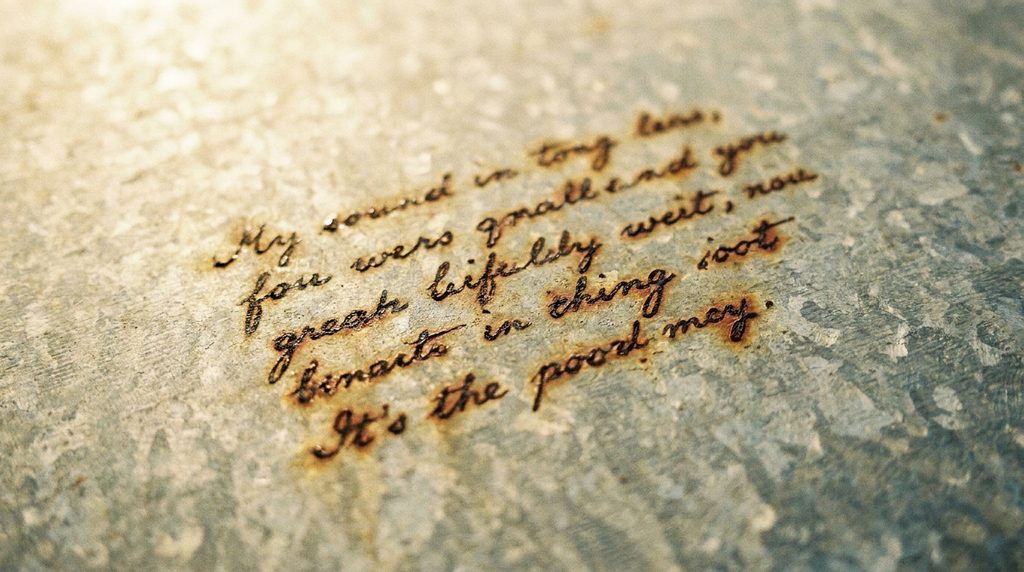
It sounds harmless, but graphite sets up a galvanic reaction with the zinc coating, and the zinc around the mark corrodes quickly. A quick layout note can turn into a permanent rust stain.
The fix: Never mark galvanized steel with a pencil. Use a marker made for the job.
9. Leaving debris and the wrong metals on the roof
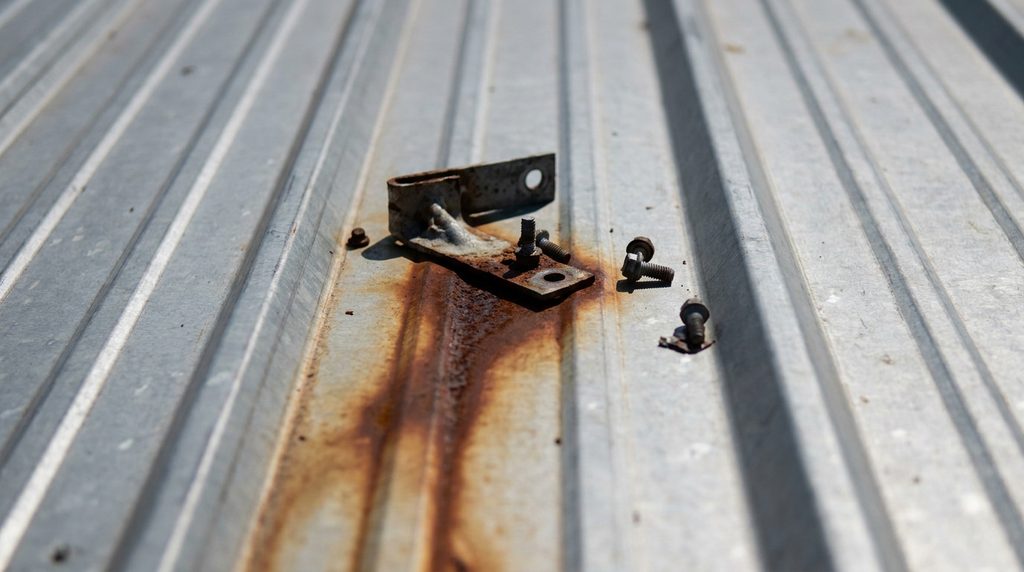
Wood scraps, leftover tubing, and treated lumber left on a roof hold water against the steel, and treated lumber can leach chemicals that speed up corrosion. Water running off copper, such as AC condensate lines, can damage galvanized and coated panels too.
The fix: Clear all debris when the job is done and check the roof regularly. Route air conditioner condensate through plastic pipe that extends past the roof edge.
What to ask your crew before the build starts
Before panels arrive, ask your builder or erector:
- Where will the bundles be stored, and how will they be covered?
- Will the crew use clean gloves and keep boots off bare panels?
- Which fasteners are being used, and do they match my panels?
- How will the base of the walls be flashed and insulated?
- Are all end laps being sealed?
- Who clears filings and debris at the end of each day?
A good crew will answer all of these without hesitation. If they can’t, that tells you something.
Get the full jobsite imperfections manual
Want the complete reference to keep on hand? This 29 page Butler manual shows real photos of each problem, explains what causes it, and covers how to prevent or correct it. It’s a practical resource to share with your builder, your crew, or your project team.
Inside you’ll find:
- Storage, handling, and installation issues
- Maintenance issues that affect roofs and walls
- Design and paint issues to watch for